Binance Web3 Wallet Tutorial: A Step-by-Step Guide
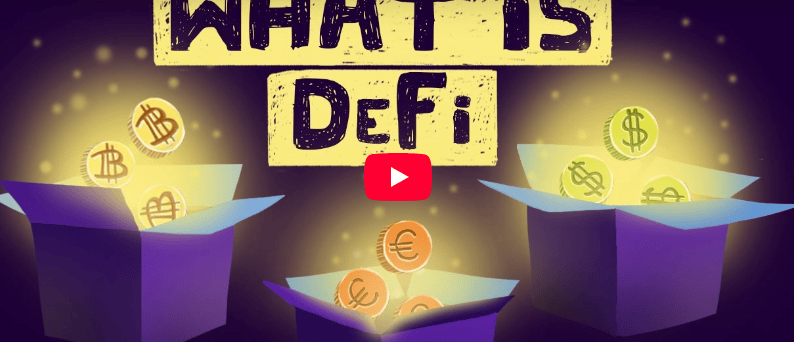
Decentralized Finance, or DeFi, is revolutionizing the financial world by offering a trustless, transparent, and cost-effective alternative to traditional centralized finance. Unlike banks and governments that control money flows, DeFi uses blockchain technology, cryptography, and smart contracts to create a system where users have full control. In this guide, we’ll explore what DeFi is, why it matters, and its five key pillars.
Centralized Finance vs. DeFi
Traditional finance relies on centralized authorities like banks and governments, which:
- Control money supply (e.g., printing more currency).
- Restrict access (e.g., denying loans or accounts).
- Impose high fees (e.g., 25% on credit cards, 18% on personal loans, or 500% on payday loans).
- Limit business operations (e.g., rejecting deposits from certain industries).
DeFi eliminates these intermediaries by using code to manage financial transactions. It’s:
- Open to anyone: No need for approval or trust in a third party.
- Censorship-resistant: Transactions can’t be blocked.
- Cost-effective: Fees are often less than 1%.
- Transparent: Code is publicly verifiable, ensuring no scams.
DeFi is built on three foundations:
- Cryptography: Secures transactions and identities.
- Blockchain: A decentralized ledger for transparent record-keeping.
- Smart Contracts: Self-executing code that automates financial agreements.
The Five Pillars of DeFi
1. Stablecoins: Bridging Fiat and Crypto
Stablecoins are cryptocurrencies pegged to real-world assets, like the U.S. dollar, to maintain a stable value. Examples include Tether (USDT) and USD Coin (USDC), where 1 coin = $1.
How it works:
- When you deposit $1, a new stablecoin is minted.
- When you withdraw $1, the coin is burned.
- This ensures a 1:1 value with the dollar.
Why it matters:
Stablecoins allow you to stay in the crypto ecosystem without relying on banks. For example:
- Scenario without stablecoins:
- You buy 1 ETH at $500, and it rises to $1,000.
- To lock in profits, you sell on a centralized exchange (e.g., Binance), pay fees, report taxes, and wait days to withdraw USD to your bank.
- If ETH drops to $250 and you want to buy again, you redeposit, wait, and pay more fees.
- Scenario with stablecoins:
- You trade 1 ETH for 1,000 USDC instantly on a decentralized exchange (DEX) with <1% fees.
- When ETH drops to $250, you trade 1,000 USDC for 4 ETH.
- Later, you sell 4 ETH for 2,000 USDC in minutes, avoiding taxes and delays.
Stablecoins are secure (code-based), fast, and ideal for regions with restrictive banking systems. For instance, you can move $10M in USDC for a $5 fee, compared to high fees and scrutiny for USD transfers.
2. Borrowing and Lending: Trustless Loans
DeFi enables borrowing and lending without banks, using smart contracts on platforms like Aave and Compound.
How it works:
- Lending:
- Person A deposits crypto (e.g., ETH) into a smart contract.
- They receive tokens (e.g., aTokens or cTokens) representing their deposit plus interest.
- They can redeem these tokens anytime to retrieve their deposit and earned interest.
- Borrowing:
- Person B wants to borrow $100 but must over-collateralize (e.g., deposit $120 in ETH).
- If Person B defaults, the smart contract uses the collateral to repay Person A.
- This ensures lenders are protected without legal enforcement.
Why it matters:
- Use case: You own 10 ETH ($1,000) but believe ETH will rise. Instead of selling, you deposit it as collateral, borrow $800 in USDT, and trade to earn $50. Later, you repay the $800 to reclaim your ETH, now worth $1,500 (if ETH rises to $150 each). You keep the $50 profit and your appreciated ETH.
- Risk: If you can’t repay the loan (e.g., only have $750), you either add $50 to reclaim your ETH or lose the collateral.
Flash Loans: A unique DeFi feature, these are short-term (10-second) loans requiring no collateral. For example, borrow $10M, buy ETH at $10 on one exchange, sell at $11 on another, repay the loan, and pocket $1M (minus fees). This arbitrage is impossible in traditional finance.
3. Decentralized Exchanges (DEXs): Low-Fee Trading
DEXs like Uniswap (Ethereum) and PancakeSwap (Binance Smart Chain) allow peer-to-peer crypto trading without intermediaries.
How it works:
- Investors pool funds into liquidity pools.
- Traders swap tokens (e.g., ETH for USDC) with fees (<0.5%) paid to pool investors.
- Smart contracts govern all transactions, ensuring transparency and immutability.
Why it matters:
- Low fees: Unlike centralized exchanges (e.g., 15% at currency booths), DEX fees are minimal.
- Variety: Uniswap offers thousands of tokens, compared to Coinbase’s 32, as it’s unregulated.
- Control: No government can ban trading or alter fees, as the code is immutable.
- Liquidity: Billions are locked in pools, ensuring ample trading volume.
4. Insurance: Code-Based Protection
DeFi replaces traditional insurance with smart contracts.
Example:
- A farmer buys crop insurance via a smart contract: “Pay $100,000 if temperatures exceed 90°F for four consecutive days.”
- He pays a $2,000 premium.
- An oracle (a trusted data source) verifies the temperature.
- If conditions are met, the contract automatically pays out.
Why it matters:
- Automation: No human intervention, reducing costs and delays.
- Funding: Payouts come from premiums and investor liquidity, with investors earning interest.
- Accessibility: Anyone can buy insurance without bureaucratic approvals.
5. Margin Trading: Amplify Your Gains
Margin trading in DeFi allows you to borrow funds to amplify returns, secured by smart contracts.
Traditional Margin:
- You borrow $100 to buy a $100 stock, paying a $20 down payment and 5% annual fee.
- If the stock rises to $150, you sell, repay $80 (the bank kept your $20), and profit $70—tripling your $20 investment.
- If it drops to $80, the bank forces a sale to recover the $100 loan, and you lose your $20.
DeFi Margin:
- Same mechanics but faster, cheaper, and open to anyone with crypto.
- No ID or minimum balance required, unlike centralized platforms.
- Fees are lower than traditional finance’s high margin rates.
Why DeFi Matters
DeFi offers:
- Freedom: No central authority can restrict access or seize funds.
- Affordability: Fees are a fraction of traditional finance’s rates.
- Innovation: Features like flash loans and DEXs are unique to DeFi.
- Investment: Billions are flowing into DeFi due to its potential to disrupt banking.
However, DeFi carries risks, such as smart contract vulnerabilities and market volatility. Always research and start small.
Conclusion
Decentralized Finance is reshaping how we save, trade, borrow, and invest. By leveraging stablecoins, lending platforms, DEXs, insurance, and margin trading, DeFi empowers users with financial freedom and efficiency. Whether you’re avoiding high bank fees or exploring new investment opportunities, DeFi is worth exploring.
Ready to dive in? Start with a trusted wallet (e.g., MetaMask), explore DEXs like Uniswap, and join the DeFi revolution!


Post Comment